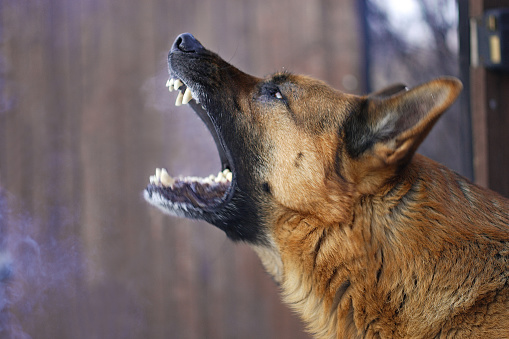
Security dog attacks — what farmers need to know

Under Irish law, the owner of a dog is generally strictly liable for any injury caused by that dog

Image credit: Irish Examiner

Dear Karen, 

I run a working farm that has a public right-of-way running through part of the land. A neighbour keeps several large dogs for security. 

Recently, while walking the boundary fence early one morning, I was attacked and bitten by one of these dogs after it strayed onto my land. 

I required medical treatment and have been unable to carry out my normal farm work since the incident. I am unsure where I stand legally, particularly as the dog was not mine and the attack occurred on agricultural land rather than in a public place. Do I have any legal recourse?

Dear Reader, 

I am very sorry to hear about your experience. Incidents involving dog attacks on farms can have serious physical and financial consequences, particularly where a farmer’s ability to work is affected. The law in this area is clear and affords strong protection to injured parties.

Under Irish law, the owner of a dog is generally strictly liable for any injury caused by that dog. This principle applies regardless of where the attack occurs, whether on a public road, private land, or farmland. You do not have to prove that the owner was careless or negligent. 

It is sufficient to establish that the dog caused the injury and that the defendant was the owner or person in charge of the dog at the time.

    Where a dog strays from its owner’s land onto neighbouring farmland and causes injury, liability will ordinarily rest with the dog owner.

    The fact the injured person is a farmer carrying out normal agricultural duties does not reduce or limit the entitlement to compensation. In circumstances where the dog was being used for security purposes, the courts may take a particularly serious view of the risk posed by such animals if they are not properly controlled.

    In addition to physical injuries, loss of earnings is a key consideration in farm-related cases. If you are unable to carry out essential farm work as a result of the injuries sustained, this financial loss can form part of a personal injury claim. 

    Medical evidence linking your inability to work directly to the attack will be required, together with documentation of income loss or additional costs incurred in hiring assistance.

    It is also relevant whether the dog was of a restricted breed or had previously displayed aggressive behaviour. Owners of dogs owe a duty to ensure their animals are adequately restrained, securely confined, and not permitted to wander onto neighbouring lands. Failure to do so can also expose the owner to regulatory or criminal consequences under dog-control legislation.

      The first procedural step in pursuing a claim is to make an application to the Personal Injuries Assessment Board. This must generally be done within two years less one day from the date of the incident.

      If liability is disputed or the assessment is not accepted, court proceedings may then be issued. The level of damages sought will determine whether the case is heard in the Circuit Court or High Court.

      From a practical point of view, it is important to preserve evidence at an early stage. Photographs of injuries, medical records, details of witnesses, and any prior complaints about the dog should be retained. Garda involvement, if any, should also be documented.

      Given the seriousness of dog attacks and the potential impact on your livelihood, it is strongly advisable to seek legal advice promptly. 

      A solicitor can guide you through the process, advise on time limits, and ensure your claim is properly advanced so you can focus on recovery and the continued operation of your farm.

      Let Us Know Your Questions

      Your email address will not be published. Required fields are marked *

      Book a Consultation

      Related Blogs

      What Happens If You Die Without a Will in Ireland? Intestacy Rules Explained

      Dying without a will in Ireland means that the law, rather than your own wishes, decides who inherits your estate. Where there is no valid ...
      Comforting hand supporting the old man

      When can a will be challenged for lack of capacity?

      Dementia does not automatically mean lack of capacity, writes rural solicitor...

      How Probate Works in Ireland: A Step-by-Step Guide for Executors

      If you have been named in a will, understanding how probate works in Ireland is one of the first things you need to know. Probate ...
      Wind power

      Considering a wind turbine on your land?

      While wind turbines are often associated with more marginal or boggy ground, this is not always the case...

      Mediation vs Litigation in Ireland: Which Route Fits Your Dispute?

      When a dispute will not settle, the usual choice is mediation or litigation. Mediation is private, voluntary and focused on agreement...

      Should I sign the energy company’s option agreement?

      An option to grant an easement gives the developer the right, but not the obligation, to require you...