
NEED LEGAL ADVICE?
SPEAK TO A SOLICITOR
Tell us briefly about your situation and we’ll get back to you.

Dear Karen,
I had a couple of fences damaged in the recent storms and my cattle have been finding new gaps to get through that I wasn’t aware of.
As a beef farmer, if my cattle stray onto another person’s land or onto the public road, what are my obligations? Am I liable if they cause damage?
However, if cattle cause damage when they are being driven on a public road, the owner will be liable only for the damage caused if there is in some way negligence in the course of driving the cattle
An example of how negligence may arise in this instance might include driving too many cattle at once or failing to have adequate assistance to control the animals.
In relation to animals on public roads, the law in this area no longer makes a landowner strictly liable for his or her animals that cause damage or injury on a road. Instead, the wrongdoer is subject to the normal rules of negligence and nuisance.
The Animals Act 1985 states that a farmer has a duty to prevent damage by animals straying onto a public road. A farmer must show that he has exercised reasonable care in ensuring that his or her animals did not escape onto the public road.
There are exceptions, for example, if land is situated in an area where fencing is not customary, such as Connemara, where it is commonplace to see sheep grazing on the side of the road with no fencing surrounding them
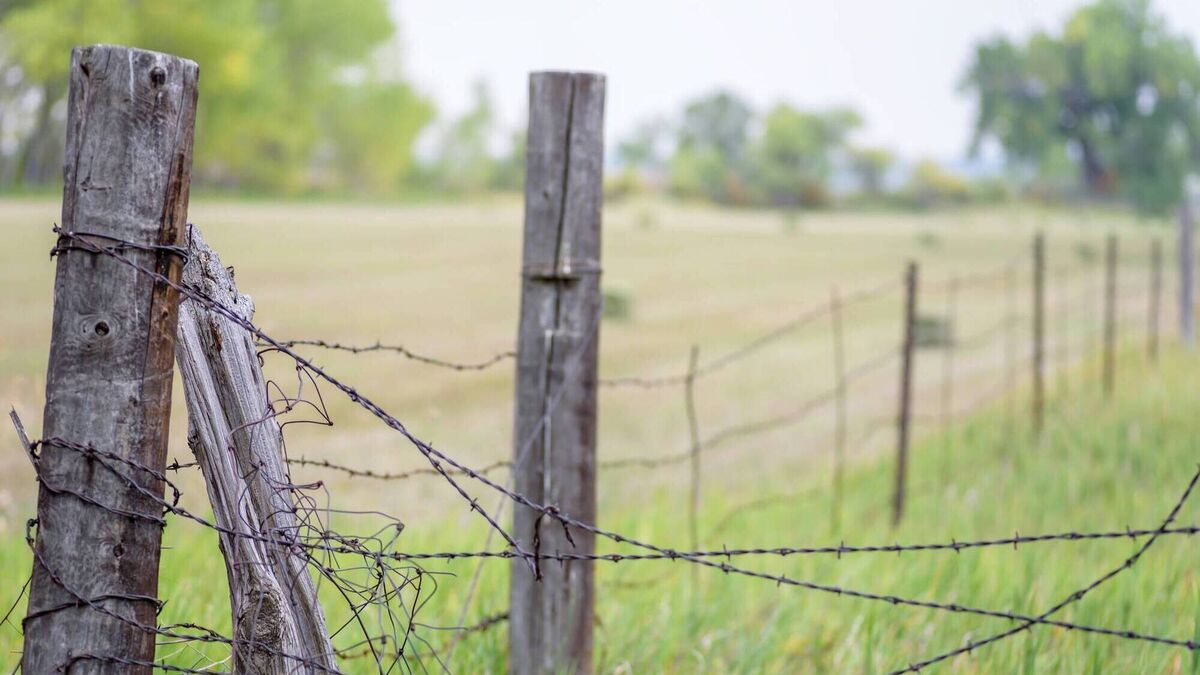
A farmer must be in a position to show that he took reasonable care while having adequate fencing and a locked gate (if the circumstances require). The landowner is not required to prove how the animals came to be on the road and the fact that the animals succeeded in escaping onto the road is not of itself proof of any negligence on the landowner’s behalf.
Farmers should minimise the risk of liability by ensuring that they have a written document in place which outlines the procedure for carrying out stock movement in a safe, controlled, and responsible manner. Stock proof fencing is recommended.
Landowners should ensure that livestock have sufficient grass and water available to them at all times so that they will not stray because of thirst or hunger. It would also be prudent for the farmer to adopt a procedure which ensures that all gates leading onto a public road are padlocked.
Farmers have a higher duty of care in respect of dangerous animals such as bulls. Farmers must have regard to the animal’s nature, type, species, breed, development, and environment.
Bulls are naturally regarded as being more dangerous than lambs, for example. Thus, creating precautions on a higher degree of care must be exercised in relation to bulls.
It is not advisable for a farmer to place a bull on lands near a public roadway or on lands over which there is a right of way or where members of the public are known to congregate.
Karen Walsh, from a farming background, is a solicitor practising at Walsh & Partners Solicitors, 17 South Mall, Cork, and 88 Main St, Midleton, Co Cork, and also the author of Farming and the Law. Walsh & Partners also specialises in personal injury claims, conveyancing, probate.
Email: info@walshandpartners.ie
While every effort is taken to ensure the accuracy of the information contained in this article, Karen Walsh does not accept responsibility for errors or omissions howsoever arising. Readers should seek legal advice in relation to their particular circumstances at the earliest opportunity.




To provide the best experiences, we use technologies like cookies to store and/or access device information. Consenting to these technologies will allow us to process data such as browsing behavior or unique IDs on this site. Not consenting or withdrawing consent, may adversely affect certain features and functions.
Manage your cookie preferences below:
Essential cookies enable basic functions and are necessary for the proper function of the website.
Tell us briefly about your situation and we’ll get back to you.
Tell us briefly about your situation and we’ll get back to you.
 Optimized by Seraphinite Accelerator