Should I sign an exclusivity agreement with a solar company?
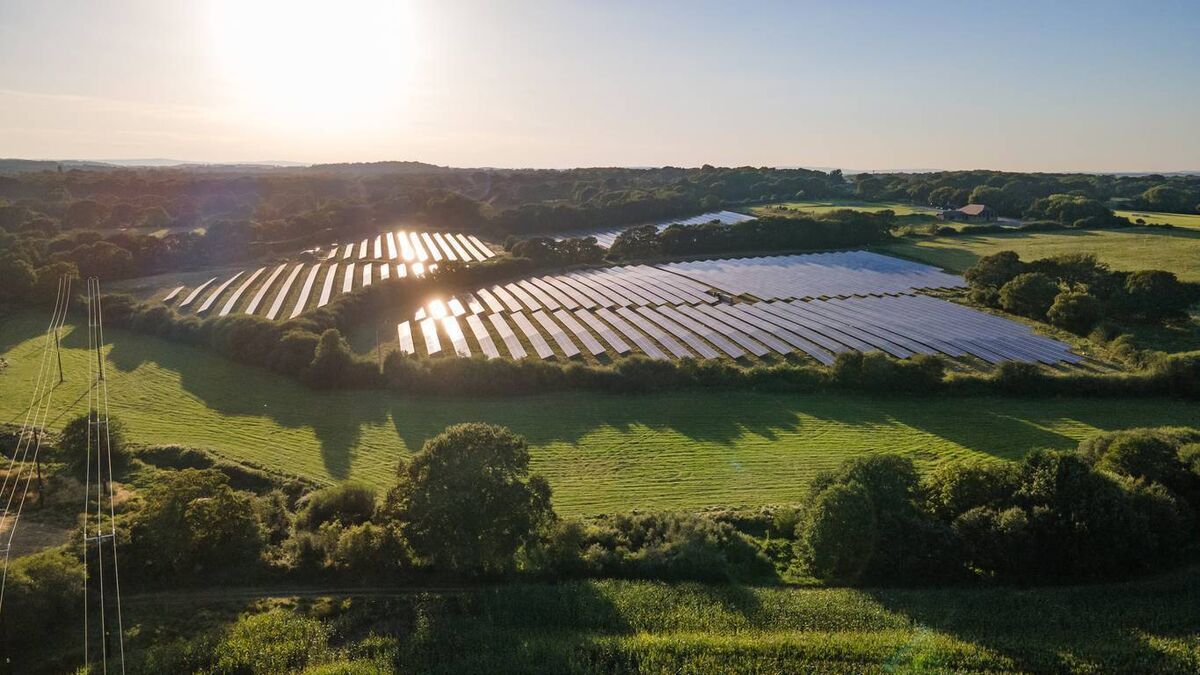
Image credit: Irish Examiner
Dear Karen,
A solar developer has approached me about potentially putting a solar farm on my land. He has asked me to sign an exclusivity agreement, and he said that his solicitors will issue the final agreements to my solicitor for review.
I think it is a good opportunity, and I am very interested. What would you advise? What are some of the things that I should look out for?
An exclusivity agreement is usually a two-page document which identifies the site by reference to a map. The term of the exclusivity agreement is usually for 12 months
The developer will want the landowner to sign an exclusivity agreement for a specific period of time, sufficient to enable the developer to deal with all preliminary matters and conduct feasibility tests on the land. During the term of the exclusivity agreement, the landowner is prohibited from entering into any negotiations with another developer.
From the landowner’s perspective, exclusivity agreements should be avoided wherever possible until full heads of terms have been agreed. The heads of terms document outlines the basis of the project; it usually contains or makes reference to the format of the option and lease agreements and the rights of the developer. The heads of terms will also confirm the duration of the option and the lease.
If the heads of terms are not agreed upon before signing the exclusivity agreement, a landowner could easily find himself in a far weaker position when subsequently negotiating the terms of the option agreement and lease.
It is important to seek legal advice prior to signing an exclusivity agreement or heads of terms.
An option agreement is an agreement between a developer and a landowner which allows the developer the right, but not the obligation, to take a lease of all or part of the landowner’s land at an agreed price for an agreed term and at some point within the specified term to construct a solar farm on the landowner’s land.
The option agreement usually favours a developer rather than a landowner. It gives the developer greater flexibility in terms of what he or she proposes to do. This reflects the time and resources which the developer will be expending on the project.
Effectively, by signing an option agreement, the landowner is restricting his or her land use to some extent, and if the developer chooses to exercise the option, the landowner is bound to enter into a lease
It is very important that the lease is examined thoroughly prior to signing the option agreement. Both documents need to be examined together. Typically, on signing of the option, an agreed non-refundable option fee is payable — usually €1,000 per year or €100-€150 per acre per annum — the first payment being made on the signing of the option agreement.
Legal costs incurred by the landowner are normally discharged by the developer.
Developers generally seek an option term of between three and six years, depending upon the likely duration of the planning process. It is also common for the developer to incorporate an option to extend the term of the agreement, usually by two to three years and conditional on payment of a further fee to facilitate ongoing planning and other delays.
At any time during the term of the option agreement, the developer can decide when, or if, he or she wishes to progress the option agreement into a lease.
If the development cannot or does not go ahead — for example, if planning permission is refused — the option will then not be exercised by the developer, and the lease will not become operative. This brings the agreement to an end, with both parties free to go their separate ways.
Entering into an agreement with a solar developer can be an excellent opportunity for someone who does not have a child who is interested in farming or wishes to retire and provide an additional income for himself over some of his lands, provided that a well-drafted written agreement is in place and that you receive advice from a solicitor who specialises in renewable energy agreements.
Karen Walsh, from a farming background, is a solicitor practising at Walsh & Partners Solicitors, 17 South Mall, Cork, and 88 Main Street, Midleton, Co Cork, and also the author of ‘Farming and the Law’. Walsh & Partners also specialises in personal injury claims, conveyancing, probate, and family law.
Email: info@walshandpartners.ie
While every effort is taken to ensure the accuracy of the information contained in this article, Karen Walsh does not accept responsibility for errors or omissions howsoever arising. Readers should seek legal advice in relation to their particular circumstances at the earliest opportunity.
Book a Consultation
Related Blogs